Price range: $44.99 through $54.99
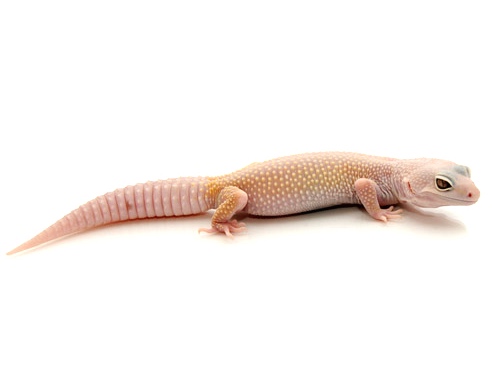
Blazing Blizzard Leopard Gecko For Sale
Eublepharis macularius
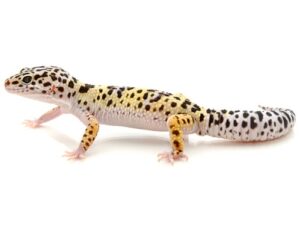
Bring home a truly eye-catching reptile with our Blazing Blizzard Leopard Geckos for sale. Known for their vibrant albino-white appearance and calm personality, these geckos are a favorite among collectors and beginner keepers alike. Each Blazing Blizzard Leopard Gecko is captive-bred, healthy, and handled with care to ensure a smooth transition to its new home.
✅ Bright albino coloration
✅ Easy to care for and gentle
✅ Live arrival guarantee
Order your Blazing Blizzard Leopard Gecko today and add a rare, beautiful morph to your reptile collection!
Leopard geckos (Eublepharis macularius) have been commonplace in the reptile industry for several decades, and for good reason. The below Leopard gecko care sheet will describe just how easy these lizards are to successfully maintain in captivity.
Range: Northern India, Pakistan, Iran, and Afghanistan.
Physical Description: Sturdy-bodied with a base coloration varying from yellow to white, with muted purple bands, and irregular black spots peppered throughout. Knobby tubercules cover their body, culminating in a thick tail used to house fat reserves. They also have working eyelids, which is rare for a gecko.
There are many different “morphs” available, which is another way of saying that there are a ton of different colors, patterns, and sizes due to tens of thousands of breedings that have produced some extremely beautiful and unique variants. They can all be bred to each other, which makes breeding them fun because sometimes you get interesting surprises.
Size: These are medium-sized geckos. Hatchling Leopard geckos are approximately 4″ in total length, and grow fairly quickly, reaching adult size in less than one year if fed effectively. Adults can attain a maximum length of 8” to 12” and a body mass that can feel substantial, due in part to their bulky tail adding to their volume.
There are three known sizes, including “normal,” “giant,” and “super giant.” Most Leopard geckos available in the U.S. are normals. Super giants are incredibly massive when you’re used to seeing the normals—around twice the mass.
Behavior: Naturally gentle and non-aggressive, these entertaining lizards make excellent captive reptiles. As is the case with most geckos, “Leos” are nocturnal, which means they are active at night. While this is true, in captivity they will also forage during the daylight hours, and will feed actively if food is made available.
One common trait of most all the Leos we’ve kept is their tendency to defecate in the same area of the cage each time. This of course results in easily manageable cage maintenance. They are clean animals and can even lick their eyeballs.
Leopard geckos are slow, and are essentially incapable of darting away like many other species of gecko. They move in a controlled, deliberate manner. Keep in mind that they can drop their tail, so be careful when handling these lizards, and never pick them up or grab them by the tail. The tail will regenerate, but will never look as stunning as the original.
| Options | Male, Female |
|---|---|
| Size | Baby, Juvenile |